



Teaching your child about money isn't a one-time conversation. It's a series of small lessons that happen over the years, whether it's deciding what to do with birthday money, saving for a new bike, or learning that not every purchase needs to happen today.
Those early experiences often shape lifelong financial habits. A Youth Savings Account gives children a safe place to save while helping them understand the value of setting goals, making thoughtful decisions, and watching their progress grow over time.
Whether your child is just starting school or getting ready for their first job, learning how to save is one of the most valuable financial skills they can develop.
Why a Youth Savings Account Matters
Money has become increasingly digital. Kids rarely see cash change hands, and many purchases happen with a tap of a phone or debit card. That can make it difficult to understand where money comes from or why saving is important.
A Youth Savings Account helps make those lessons real.
Instead of simply talking about saving, children can deposit birthday money, allowance, gift money, or earnings from chores and watch their balance grow. That simple experience helps connect actions with results, making financial concepts easier to understand.
Over time, children begin to see that saving isn't about giving something up. It's about creating opportunities for the future.
Financial Habits Start Earlier Than You Think
Children don't suddenly become financially responsible when they turn 18. Like any life skill, money management develops through practice.
Parents can build those habits by encouraging children to:
- Save a portion of birthday or holiday money.
- Set a goal before making a big purchase.
- Track progress toward something they want.
- Understand the difference between spending and saving.
- Celebrate financial milestones along the way.
These small moments help children develop confidence with money before they make larger financial decisions as adults
Goal Setting Makes Saving More Meaningful
Saving is much easier when there's a purpose behind it. Whether your child wants a gaming console, sports equipment, concert tickets, or their first car, setting a savings goal teaches patience and reinforces the value of planning ahead.
As they watch their savings grow, they experience something every financially successful adult understands: meaningful goals are usually reached one small step at a time. That's a lesson they'll carry with them long after childhood.
Every Deposit Builds Confidence
One of the biggest misconceptions about saving is that you need a large amount of money to get started. The truth is that consistency matters far more than the balance.
Even small deposits help children develop healthy financial habits. Over time, they learn that saving isn't about how much money you have today. It's about creating a routine that prepares you for tomorrow.
Those habits can help lay the groundwork for future milestones like buying a vehicle, paying for college, or building an emergency fund.
Give Their Savings a Strong Start with Allegiance
If you've been thinking about opening a Youth Savings Account, there's an added incentive to begin now.
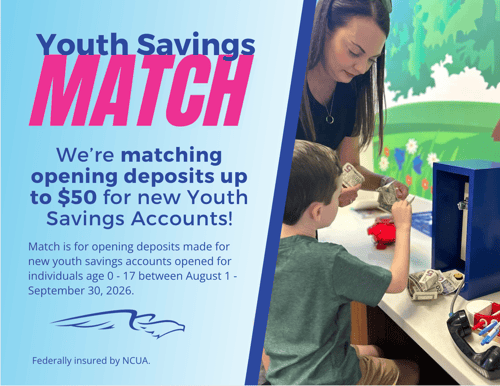
From August 1 through September 30, 2026, Allegiance Credit Union will match opening deposits up to $50 for new Youth Savings Accounts opened for children ages 0 through 17.
It's a simple way to give young savers an immediate boost while reinforcing an important lesson: every dollar saved today has the potential to make a difference tomorrow.
A Lifetime of Smart Money Habits Starts Here
A Youth Savings Account is about more than building a balance. It's about helping children develop confidence, responsibility, and the skills they'll use throughout their lives.
The earlier they begin learning how to save, set goals, and make thoughtful financial decisions, the stronger their financial foundation can become.
Opening a Youth Savings Account today isn't just an investment in your child's savings. It's an investment in the habits and confidence that can help them succeed for years to come.